
The magic of a restaurant doesn’t happen by accident.
Behind every well-executed service is structure. Systems. Leadership. Professional kitchens are not improvised environments. They are carefully organized operations where timing, communication, and cost control determine success.
Understanding how a kitchen truly works is just as important as mastering knife skills.
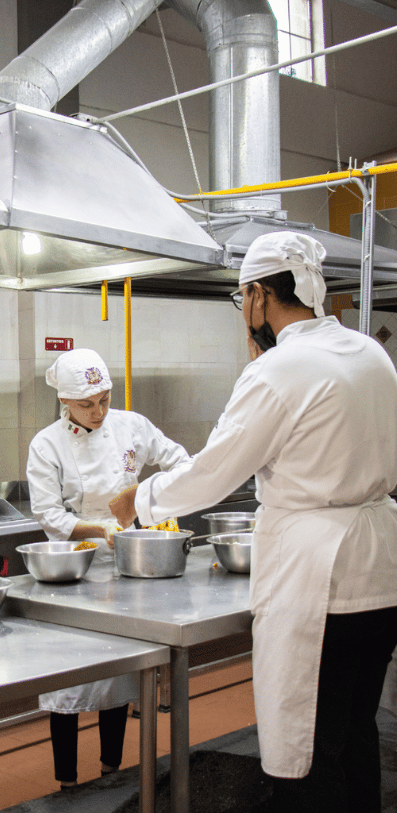
The Brigade System: Structure Creates Efficiency
Many professional kitchens operate under the brigade system, a hierarchy originally formalized to bring order and clarity to culinary operations.
Each position has defined responsibilities. From the executive chef to station cooks, this structure ensures accountability and flow. When everyone understands their role, service becomes coordinated rather than chaotic.
For future chefs, learning this system early builds discipline and teamwork.
Food Cost Control: The Business Behind the Plate
Passion does not replace math.
Food cost control is one of the most critical elements of kitchen management. Portion control, waste reduction, supplier coordination, and inventory tracking directly impact profitability.
A dish must not only taste exceptional. It must make financial sense.
Students who understand cost analysis and purchasing strategies are better prepared for leadership roles and entrepreneurial ventures.
Inventory and Organization
Professional kitchens depend on precision inventory systems. Proper storage, rotation methods, and sanitation standards protect both quality and safety.
Learning these practices in a structured, supervised environment builds habits that carry into any culinary setting.
Leadership in the Kitchen
A strong kitchen is guided by calm authority. Effective leaders communicate clearly, solve problems quickly, and maintain standards without compromising morale.
Leadership in gastronomy is developed through experience and mentorship. It requires confidence, accountability, and the ability to perform under pressure.
At ISAC: Instituto Superior de Alta Cocina, located just minutes from El Paso, Texas, kitchen management principles are integrated into the Associate Degree in Gastronomy curriculum. Students learn not only how to cook, but how to operate within a professional structure.
Guided by instructors with extensive industry experience, students train in a hands-on environment that mirrors real-world expectations. The community within the school encourages collaboration, discipline, and mutual growth.
Because culinary success is not sustained by technique alone.
It is sustained by organization, leadership, and understanding how the kitchen truly functions.
And that is where professionals are formed.