
What Does a Culinary Assistant Do? Roles, Skills, and Career Path
A Culinary Assistant plays a key role in professional kitchens, supporting chefs while developing the technical and practical skills needed to grow in the culinary industry. Far from being just a helper, this role is often the first step toward a long-term career in gastronomy.
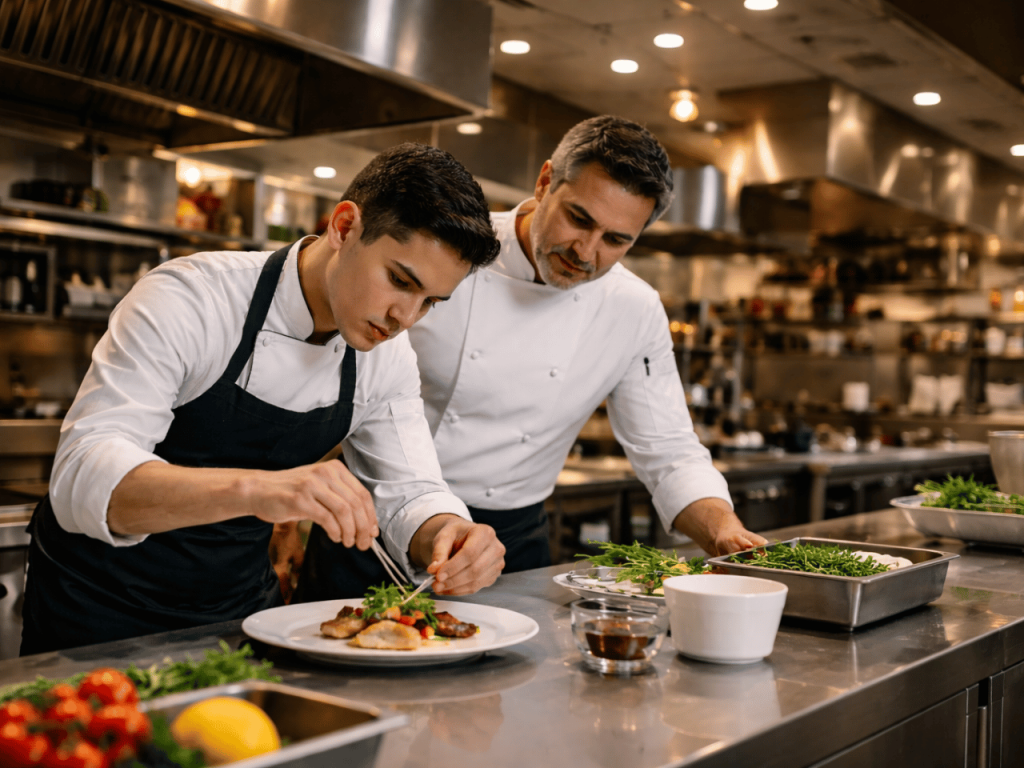
In real kitchen environments, a Culinary Assistant is responsible for tasks that keep operations running smoothly. These include preparing ingredients, maintaining cleanliness and organization, assisting in plating dishes, and supporting the execution of recipes under pressure. It’s fast-paced, demanding work that requires attention to detail and consistency.
To succeed, a Culinary Assistant must develop a strong foundation of skills. These include knife techniques, food safety and handling, understanding of ingredients, and the ability to follow and adapt recipes. Over time, they also learn to create, modify, and refine dishes using solid technical knowledge. Communication and teamwork are just as important, since kitchens depend on coordination and efficiency.
Culinary Assistants can work in a wide range of environments, from restaurants and hotels to catering services and private kitchens. As they gain experience, many move into more specialized roles or continue their training to become professional chefs.
This is where formal education makes a difference. A structured Culinary Assistant Course provides the hands-on training and real-world experience needed to enter the industry with confidence. At Instituto Superior de Alta Cocina (ISAC), students train in professional environments from day one, guided by experienced instructors and supported by modern facilities.
Located in Ciudad Juárez, just minutes from El Paso, Texas, ISAC offers a unique binational culinary culture that exposes students to diverse techniques, ingredients, and industry standards. This proximity opens doors to broader opportunities in both Mexico and the United States.
ISAC graduates are already making their mark in the industry. Many have gone on to work in high-end kitchens, while others are leading their own culinary projects and managing independent restaurants. This reflects not only the quality of the training, but also the demand for skilled professionals in today’s food and beverage sector.
Choosing to become a Culinary Assistant is more than learning how to cook. It’s about building a career with real opportunities for growth, creativity, and professional development in a dynamic and evolving industry.