
There is a phrase often repeated in professional kitchens around the world:
“Professional cooking is learned by doing.”
It is a simple statement, yet it captures one of the most important truths about culinary education. Great chefs are not created by memorizing recipes. They are developed through repetition, experience, observation, and continuous practice.
Anyone can watch a cooking demonstration. Anyone can read about knife techniques, sauces, baking methods, or food presentation. But transforming knowledge into skill requires action. It requires stepping into the kitchen, making mistakes, refining techniques, and repeating the process again and again.
For more than 18 years, Instituto Superior de Alta Cocina (ISAC) has built its educational philosophy around this principle. Located in Ciudad Juárez, Chihuahua, just minutes from the Free Bridge and the United States border, ISAC prepares future culinary professionals through an approach centered on practical experience and real-world application.
For students pursuing careers in gastronomy, the ability to learn culinary skills through practice remains one of the greatest advantages they can develop.
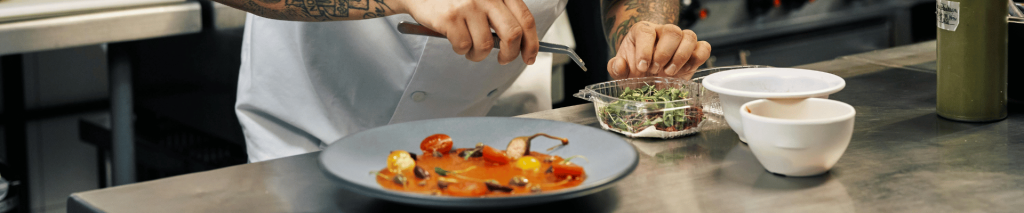
Why Repetition Builds Confidence
Every accomplished chef has performed the same fundamental techniques thousands of times.
They have diced onions, prepared stocks, sharpened knives, plated dishes, and practiced cooking methods repeatedly throughout their careers. Repetition is what transforms a new skill into a natural one.
Students who learn culinary skills through practice develop confidence because they become familiar with the tasks they perform every day. What initially feels difficult gradually becomes comfortable. Techniques become smoother. Decisions become faster. Execution becomes more precise.
At ISAC, students are encouraged to practice consistently throughout their education, helping them build both technical ability and self-assurance.
Confidence in the kitchen is not something that can be taught through lectures. It is earned through experience.
From Basic Techniques to Advanced Preparation
Every culinary professional begins with the fundamentals.
Knife skills, food safety, ingredient identification, cooking methods, and kitchen organization form the foundation upon which all advanced culinary knowledge is built.
Students who learn culinary skills through practice are able to strengthen these essential techniques before progressing to more complex preparations. As their confidence grows, they begin mastering advanced recipes, presentation methods, menu execution, and professional kitchen workflows.
This gradual progression is one of the reasons practical culinary education is so effective.
At Instituto Superior de Alta Cocina, students are guided by experienced chefs and instructors who have spent years directing professional kitchens and culinary operations. Their mentorship helps students understand not only how techniques work, but also why they matter in professional environments.
Mistakes as Part of the Learning Process
One of the most valuable aspects of practical education is that it allows students to make mistakes in a learning environment.
A sauce may break. A cut may be uneven. A dish may require adjustments. These moments are not failures—they are opportunities for growth.
Students who learn culinary skills through practice quickly discover that improvement comes from identifying mistakes, understanding their causes, and applying corrections.
In professional kitchens, adaptability and problem-solving are essential skills. The sooner students become comfortable learning from their errors, the faster they develop the resilience needed for long-term success.
At ISAC, instructors help students view challenges as part of the educational journey, encouraging continuous improvement rather than perfection from the very beginning.
The Value of Continuous Practice
The culinary industry never stands still.
New techniques emerge. Trends evolve. Customer expectations change. The most successful culinary professionals understand that learning continues long after graduation.
This is why students who learn culinary skills through practice often develop habits that benefit them throughout their careers. They become comfortable experimenting, refining techniques, and seeking opportunities to improve.
For over 18 years, ISAC has helped students cultivate this mindset through an educational model that prioritizes hands-on experience and active participation. The school’s location in Ciudad Juárez, at the crossroads of Mexican and American culinary influences, further exposes students to diverse perspectives and opportunities within the industry.
The goal is not simply to teach students how to prepare dishes.
The goal is to help them become professionals capable of adapting, growing, and succeeding throughout their careers.
Because in the culinary world, true expertise is never achieved by watching from the sidelines.
It is achieved through action.
It is achieved through repetition.
And above all, it is achieved when students learn culinary skills through practice.